Symbols Based On Circles
|
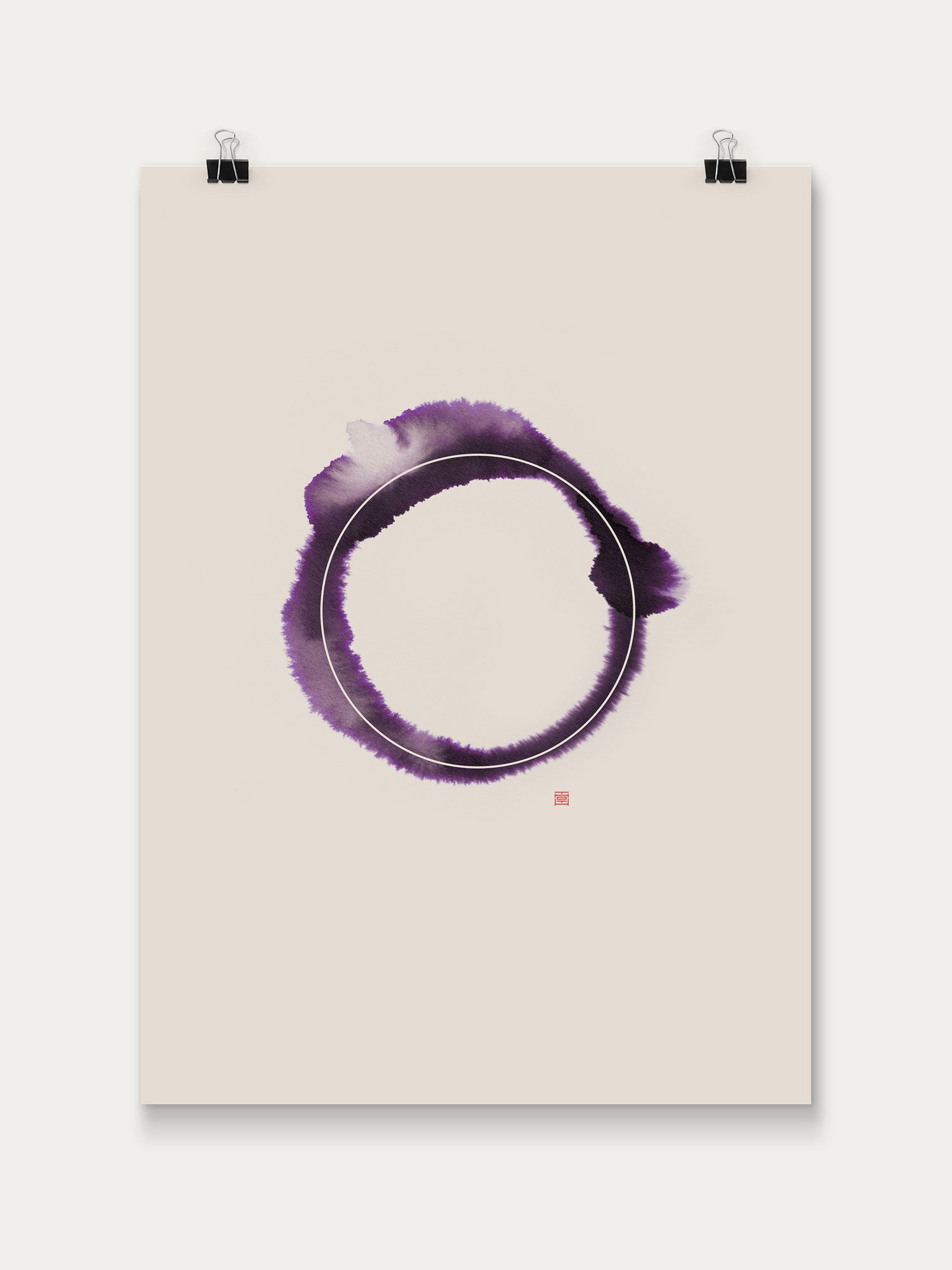
Circle N°3 (Rose)
The Circle Of Life
As Pythagoras observed, the circle is the most perfect of all shapes — it contains everything, and everything emerges from it. Every point on the circumference is the exact same distance from the center. No beginning, no end. Infinite.
Taking a closer look at point and circle, we already reach the core of the symbol’s meaning: the circle is the outer expression, the construction — and the point is its absolute essence, the center around which everything turns. In a transferred sense, the point represents cosmic consciousness, the source from which all existence radiates. The circle, in its fullest sense, stands for oneness, wholeness, unity, perfection, infinity, and the cosmos.
⸺
The circle is, to a certain extent, the oldest of all symbols. Easier to draw is only a point — and a point is, essentially, a very small, filled circle.
⸺

Circle, Kalachakra Mandala, Ensō, Flower Of Life
The Cosmic Circle
The circle shows us the complete story of creation in its simplest form. In the beginning there was nothing — and then there was consciousness. That consciousness is symbolized by the circumference drawn within nothingness.
⸺
I recognize a universal ground principle in this: circles within circles, within circles — endlessly connected, each part of a larger whole. An infinite mesh of concentrated vibrations.
This principle appears everywhere in nature. Heat radiates spherically. Planets orbit the sun. Atoms circle their nucleus. Ripples on water spread in perfect circles from a single point of contact. Our thoughts circle our problems. We enter the world through a circular opening, see it through circular pupils embedded in a circular iris, and — according to Eastern traditions — our soul departs through the fontanel, to begin the cycle again.
⸺
The rules of the cosmic and atomic structure of natural phenomena are based on the circular form. That alone is reason enough to understand the power of this symbol.
⸺

Yin and Yang, Spiral, Egg, Labyrinth
|

Earthy Ensō
Ensō
Ensō is Japanese for circle — a word also used for mandalas and sacred, circular spaces. The symbol comes from Japanese calligraphy, though it is a symbol, not a character. It is closely connected with Zen Buddhism, where it stands for enlightenment, perfection, strength, elegance, the universe, and mu — the void.
For me, drawing Ensō is not an exercise in perfection but in presence. Each circle is drawn in a single, fluid stroke — and whatever emerges is exactly what it is: a document of that moment, that breath, that state of mind. No two are alike. The circle may be open or closed, tentative or bold. Wabi-Sabi — the beauty of imperfection — is present in every one.
I have been drawing Ensō regularly for years, and I am still not tired of it. I suspect I never will be.
|
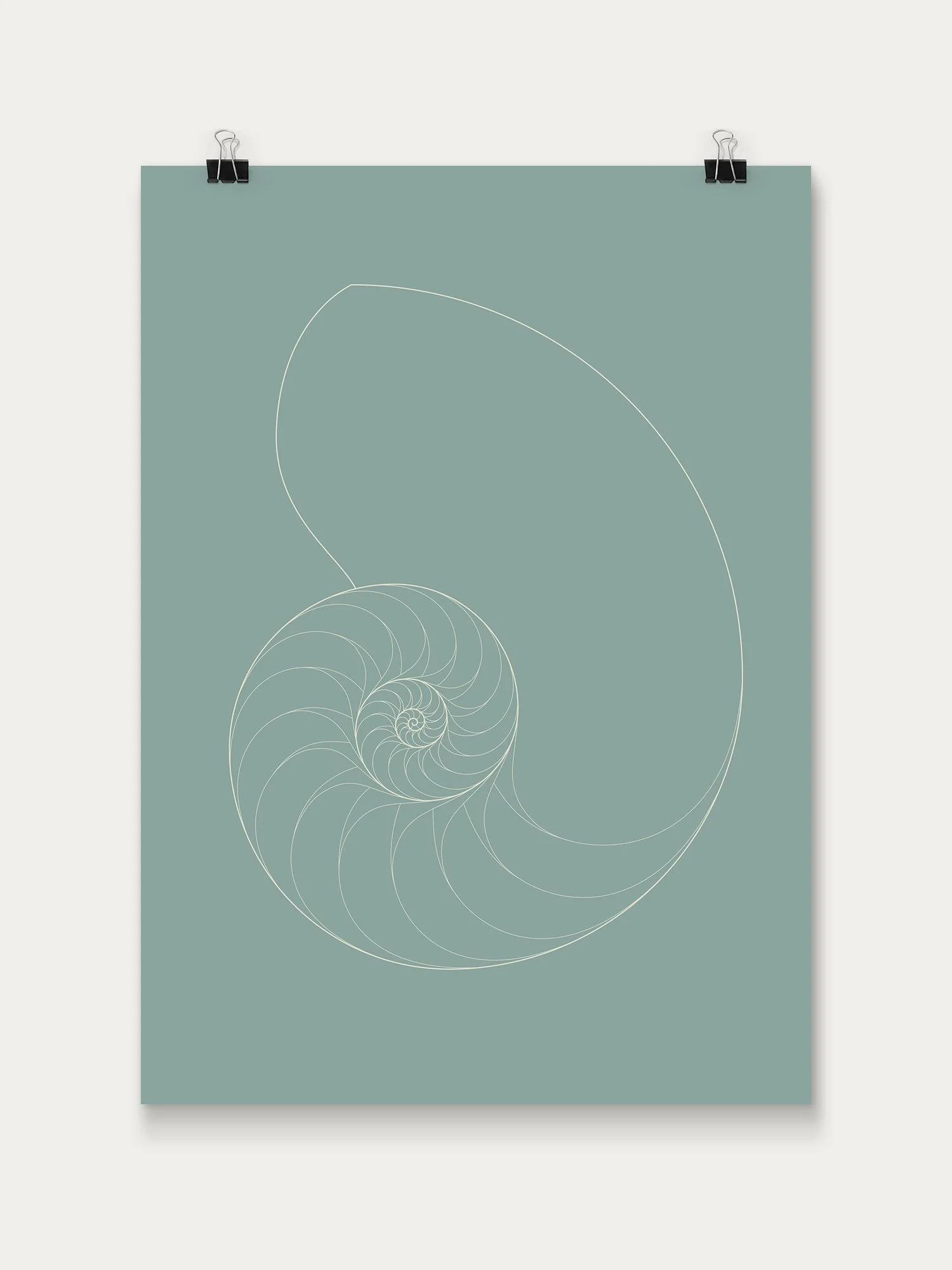
Nautilus
Nautilus and Spiral
The nautilus is perhaps the most elegant example of the spiral in nature — a logarithmic curve of extraordinary precision, built chamber by chamber according to the Fibonacci sequence. Each chamber follows exactly the golden ratio: 1.618... One doesn’t need to be a mathematician to feel the poetic beauty of this structure.
The spiral embodies development, energy, and movement — always expanding outward or contracting inward, depending on direction. The clockwise spiral represents becoming, growth from the center outward. The counterclockwise spiral represents return, dissolution back into unity. Together they form the double spiral — Fermat’s spiral — representing both movements simultaneously: creation and return, inhale and exhale.
This is what fascinates me about the spiral: it is never static. It is time made visible.
|
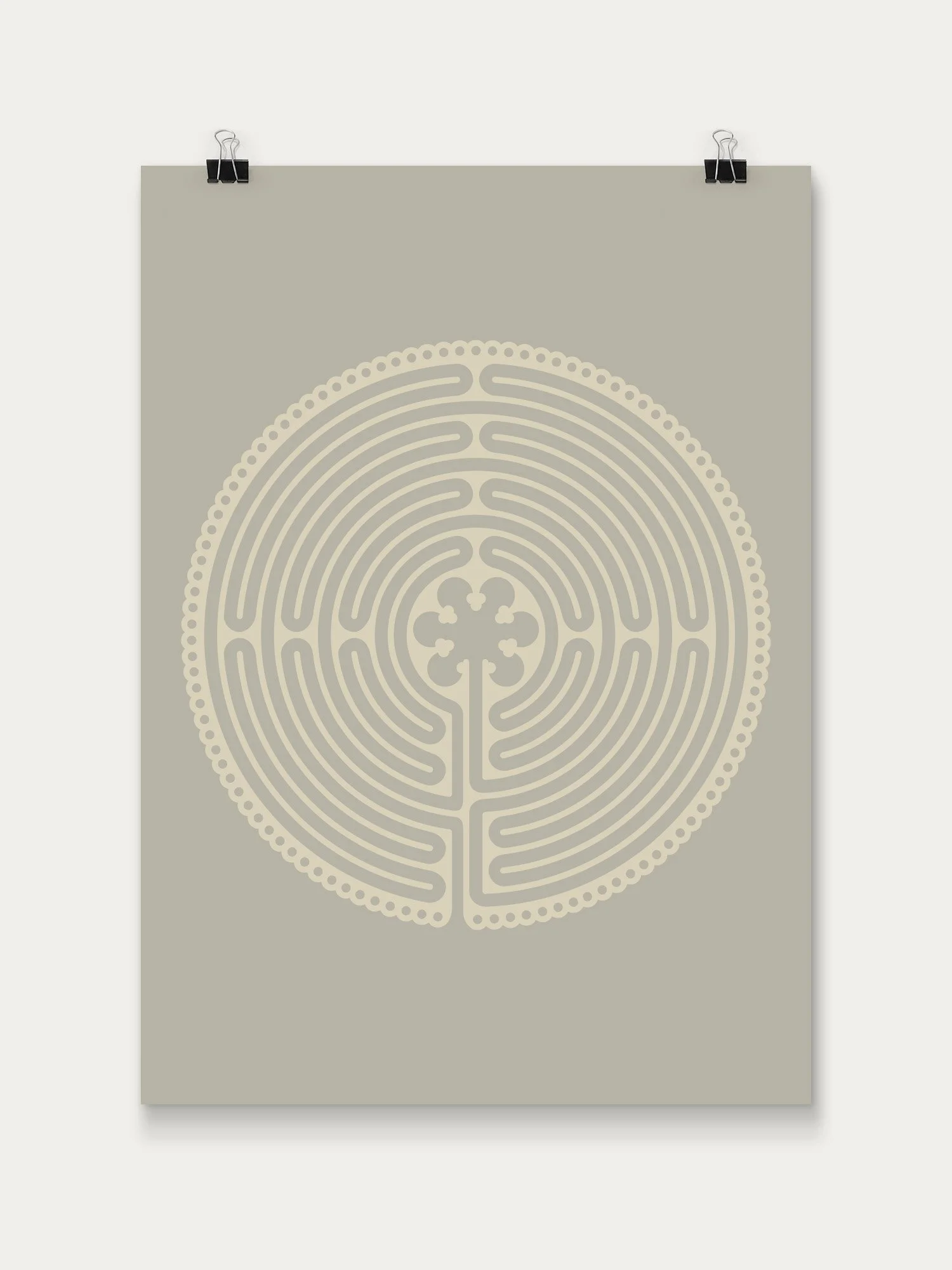
Labyrinth
Labyrinth
A labyrinth is a system of paths that, through numerous changes of direction, inevitably leads to a centered goal. It is one of the oldest symbolic constructions known to humanity — found in cultures across the world, from the cathedral floor of Chartres to Greek and Roman legend, from ancient burial sites to protective amulets.
The labyrinth embodies our path through life — the winding, sometimes frustrating journey toward unity and self-knowledge. What strikes me about the labyrinth is that, unlike a maze, it has no dead ends. Every path leads to the center. The question is only how long we are willing to walk.
|
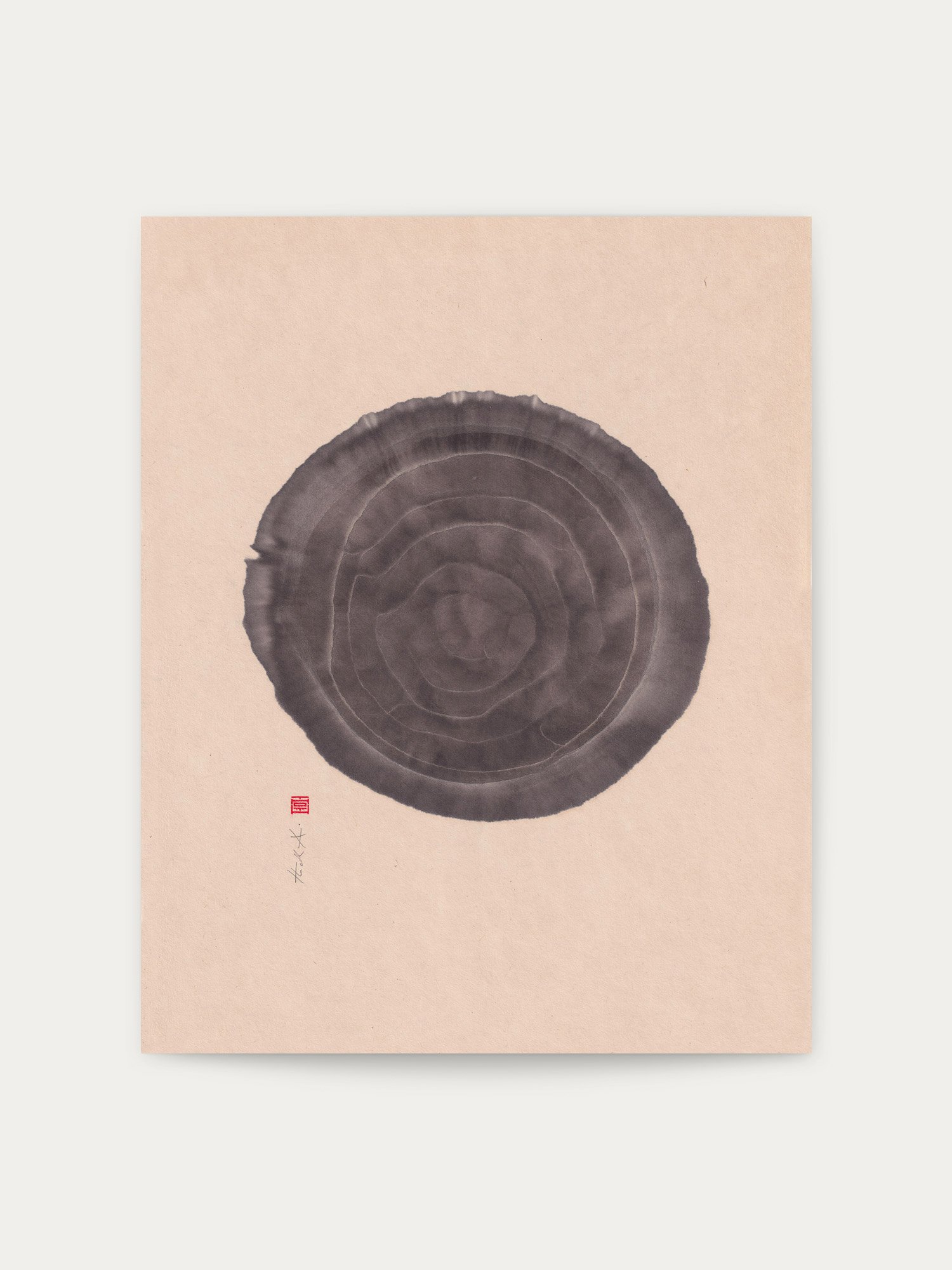
Ensō N°51
Mandala
The word mandala comes from Sanskrit and translates simply as circle. It describes a circular image with a magical or religious significance — used across Hinduism, Buddhism, indigenous traditions, Islam, and many other cultures. Always oriented toward a center point, always structured as a whole.
Today the word is used broadly, as a generic term for all kinds of meditative, circle-oriented images. What all mandalas share is this: they direct attention inward. The symbolism aims toward the unconscious, addressing and stimulating specific areas of the psyche through color and form. The goal of mandala meditation is, almost universally, the experience of unity.
In my own work, I find the closest equivalent in the Spheres — works that emerge through concentric layers of ink and pigment, growing slowly from a central point outward. Not planned, not geometric, but driven by the same impulse: concentration, centering, and the gradual revelation of something that was already there.